
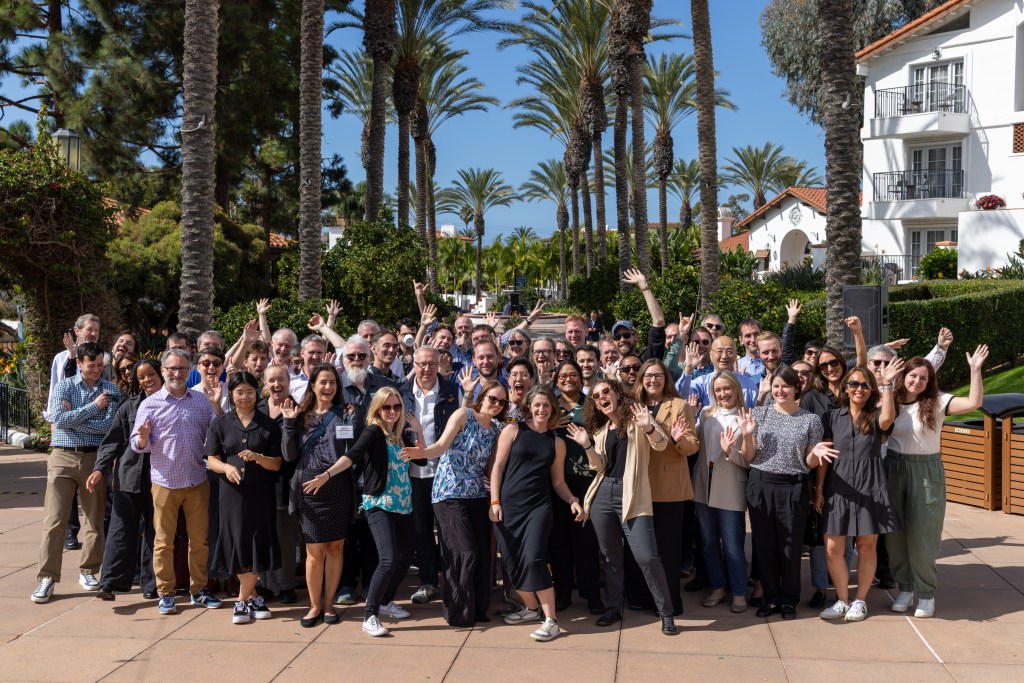
It may have been the final CZI Open Science meeting, but it also featured the launch of openRxiv! And that is a reason for great excitement around the future of preprints.
To start though I must say a huge thank you and congratulations to the CZI team. These are always excellent meetings but this one really stood out for me. Between the fantastic mix of people and openness in discussions this year felt particularly productive. The resort in Carlsbad was beautiful and the team did such a great job of providing lots of space for discussions and networking. There were a few takeaways from the meeting and below I’ll cover what I found particularly interesting.
AI
Definitely not a surprise. Just about every meeting or conference I’ve been to over the past two years has had a big dose of AI related topics and discussions. CZI is pivoting towards a focus on 4 grand challenges, something that is very exciting for the wider space and has a big AI component. The virtual cell has enormous potential and the focus on immunology and imaging (my background) is very exciting. To save those of you reading this from AI-overload, I won’t say much more. But there were some interesting things on show, perhaps the takeaway for me was the new platform qed – designed to help manuscript authors identify any gaps in their claims, it is definitely one to watch. I’ve had a little play around and it does seem to work really quite well and is one of my follow up discussions.
OA concerns
This was the final CZI OS meeting and that formed a large number of discussions that occurred. There is now some uncertainty around the future of open science and concerns over who (if anyone) might step in to fill this funding void. There was also concern that some efforts in open science may be pushing too far and have the effect of leading to more closed access.
One very interesting conversation was around the goal of “open”. Myself and another both felt like pursuing open as a goal has been a mistake and led to “open for the sake of open”. This is also seen in some of the conversations recently around how preprints should be used – see the recent journalology newsletter for a poor take. The goal should be rigorous, good, science. Openness and transparency have a key part in this but is not the only component. As such, when the goal becomes simply to make research open, an awful lot is lost. It has also, in part, led to an increasing disillusionment in open science. This really highlights the importance of ensuring that the end goal is the right one and taking care with the words used. I believe that “open” became the goal due to ease in measuring this, partially at least. Rigorous science is harder to measure and assess, but we should not pursue things just because they are easy.
Culture
You will know by now that at Rippling Ideas, culture is a foundational focus. I’ve long said that trying to only change publishing behaviour or academic assessment independently isn’t the way forward. It was very good to see just how much this was acknowledged in the many discussions I had with people. There were even breakout sessions specifically focussed on culture change.
One discussion I would like to elaborate on was in relation to the role of different stakeholders. There were questions that openRxiv should mandate CC-BY licences for bioRxiv and medRxiv (watch here to learn more about licences). This discussion included comments on the funders having mandated preprints and therefore it was “right” that openRxiv mandated certain things too. I disagreed on this as I believe that different stakeholders very much have different roles to play. Funders can and should mandate, whereas preprint servers should provide authors with choice and training/awareness. Indeed, a coalition of the various stakeholders working in unison to coordinate their different roles could have a huge impact compared to the current approaches.
Mandates result in compliance, training and outreach result in lasting cultural change
There are still many barriers to the wide adoption of the practices that the participants of this meeting would like to see. Given the significant overlap in interests, it does feel like more progress could be made in this space.
The future is openRxiv
Following the CZI Open Science meeting, there was a day event specifically for openRxiv. Perhaps unsurprisingly, this was my favourite part of the week. Throughout, there was a lot of excitement about the potential of openRxiv and getting to hear about the approach and plans only furthered this. From my perspective, the team is taking an exceptionally well thought out and intentional approach to building this new organisation. The talk of embedding values – not just words – was particularly welcome and a very positive hint at the kind of organisation that openRxiv will be. For us, values (and adhering to them) are the key to ensuring that you make the right decisions.
I won’t share what was discussed as to not give anything away but one of the comments made by an attendee is definitely worth highlighting. When discussing bioRxiv and medRxiv, a number of people highlighted that these servers were very well timed and that the pacing of the efforts from the (now) openRxiv team have been key to making progress whilst not moving too quickly and losing people. Indeed, this pacing is an often underdiscussed component to the success of preprinting in the life sciences. It definitely feels like now is the ideal time for an entity like openRxiv which can best fill the gap in preprint advocacy that currently exists since the loss of other efforts (us aside, but we’re still unfunded).
A highlight was Richard Severs talk on the article of the future where he described preprints as a node within a constellation of linked objects that include narrative, data deposited in repositories, archived code, verification badges, and any necessary protocols or preregistered research plans, amid a cloud of review and evaluation elements.
It’s also worth highlighting just how good an investment bioRxiv has been – particularly for CZI who are one of the biggest donors. This is very possibly the best investment in science this century. Preprints led to the saving of millions of lives during the COVID pandemic, have sped up the process of discovery and disrupted academia in a highly positive manner. And these changes are still only just getting underway. To me, preprints represent a turning point for academia; a chance to move towards a healthier culture, more trusted work and greater accessibility.
This is very possibly the best investment in science this century
This is not to say that the path forward is going to be easy. We’ve witnessed the withdrawal of significant funding from this space, the removal of key voices and the hijacking of once great efforts by people who place themselves above the goals we should be striving towards. There’s also a growing crossroads in preprinting, with one group seemingly wanting to simply replicate the system we have, with minor improvements, and another wanting real change. This is all occurring in the background of the traditional publishers who have their own preprint servers in an attempt to control and limit this movement. However, if any team can achieve this then it is the openRxiv folks. The fact that they can now expand and undertake more efforts in advocacy and play a central role in coalition building provides a strong advantage to the “right” direction forwards.
Trust signals
Throughout both meetings, trust signals permeated. It was clear that there is now a desire to move away from peer review as the lone quality indicator and metrics such as impact factor or h-index. This is something that both openRxiv and we at Rippling Ideas strongly support – indeed we’ve both separately written about this.
What I particularly liked about this component was that openRxiv is perfectly positioned to encourage and widen this approach which might just be sufficient to combat some of the (many) problems I see with the PRC efforts. It also highlights that the PRC movement is outdated and not a meaningful change.
There are an ever growing number of efforts to widen these signals of trust and the next 5+ years is likely to see a whole range come and go. There is a definite need for some standardisation across these efforts and to tie them in with culture change and advocacy – this is how we give the best indicators the best chance of sticking. Indeed, this is something that we hope to focus on in the coming years.
China?
One key discussion that I felt was generally missing from discussions was that around the role of China. China is now the largest producer of research in the world and it’s long overdue that the West began to reach out and advocate for preprints and open science across that region. China is poised to cause significant disruption to the OA movement and science communication more broadly. As such, it was a somewhat strange omission.
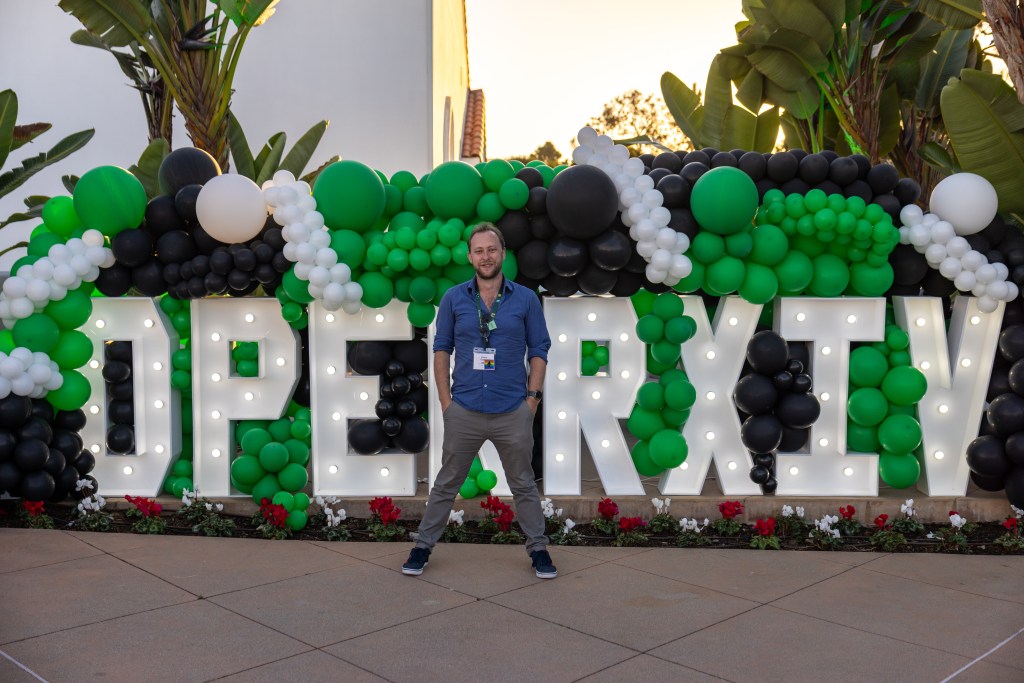
Overall, the meeting was filled with excellent discussions and left me feeling very excited about the direction of openRxiv and the future of preprints.
See an overview from Curvenote for their experience of the openRxiv celebration event.
Personal note
I really needed this specific in-person gathering and the incredibly warm reception I received is one of the biggest reasons I care so deeply about this community – they’re very welcoming to new people (not that I’m new anymore) and passion/effort is seen and recognised. It’s also a space in which I feel like I can have a big impact. Given how this year has panned out for me, it was hugely heartwarming to be surrounded by supportive people and to see the reach I’ve had with my work so far. I also got the opportunity to make some new connections and meet some people I really should have already met.
There was a lot of enthusiasm for Rippling Ideas with many people commenting on how needed such an effort is – sentiments that were also shared earlier this year at the metascience conference.
 Rippling Ideas