
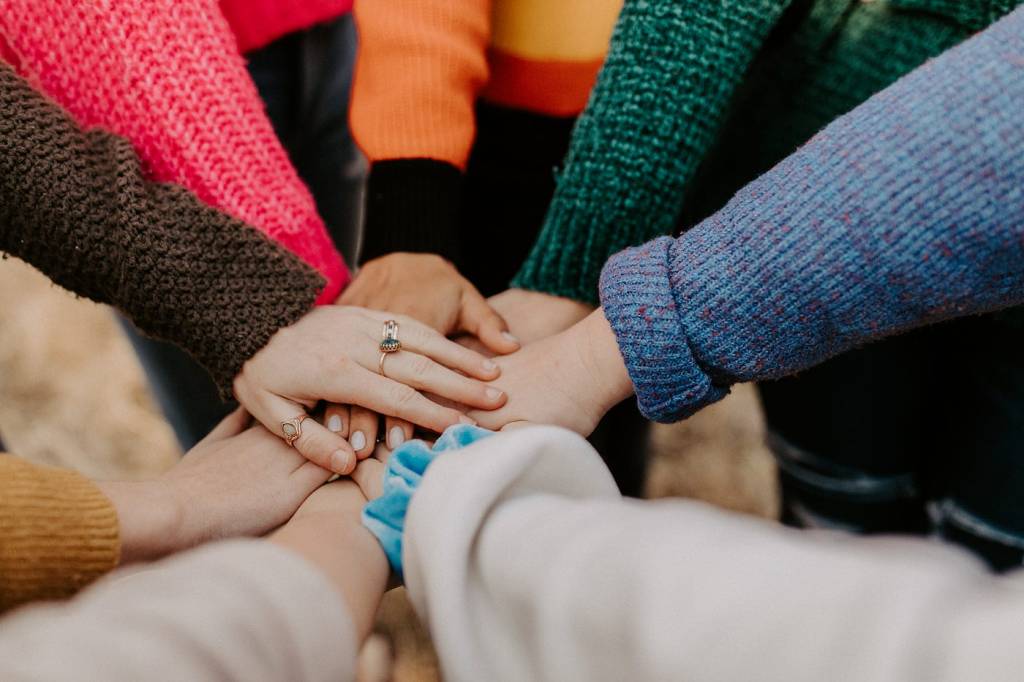
Community; a social unit with commonality such as values, identity, norms, place or aim.
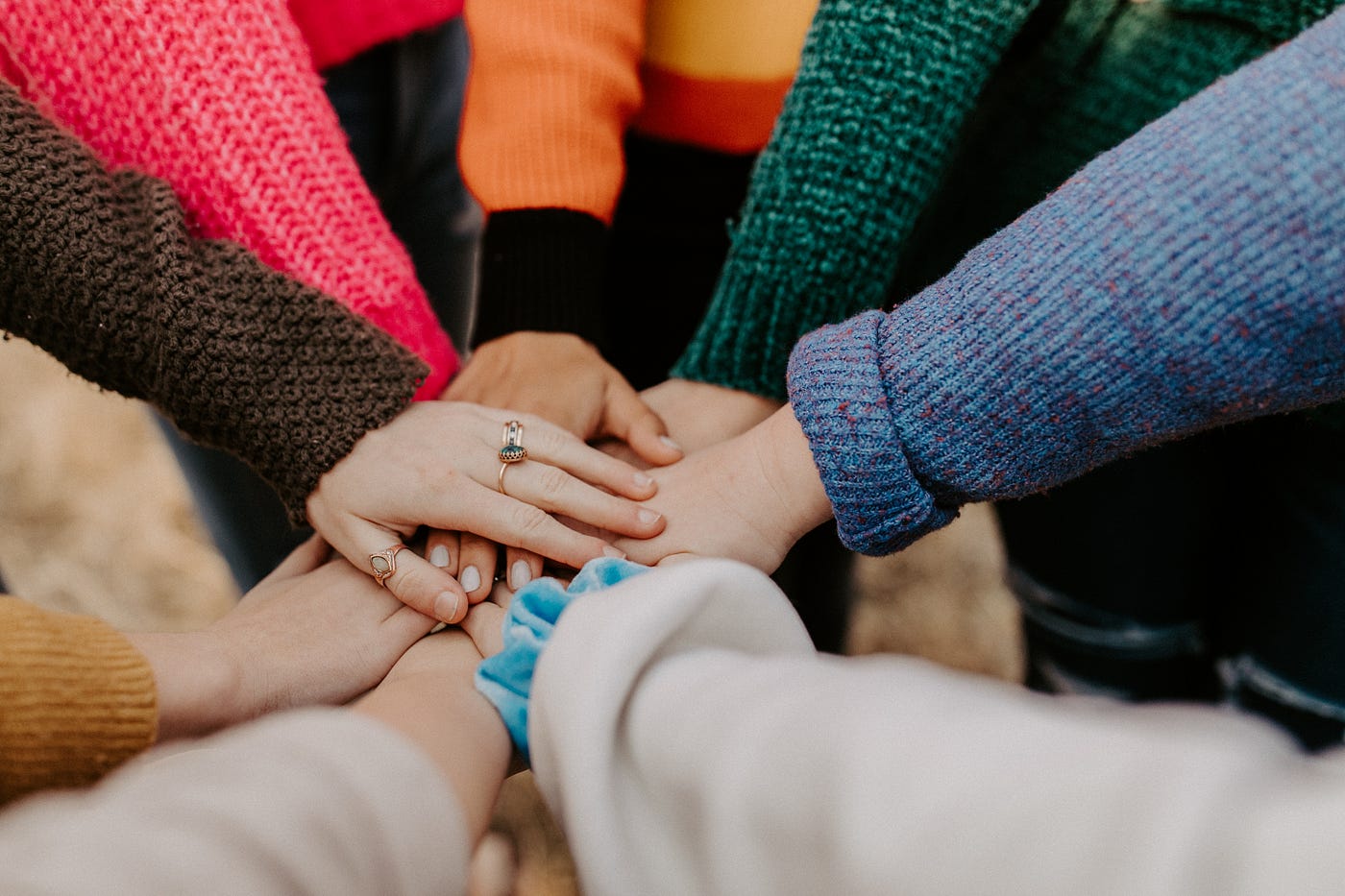
In academia, a community is often a group with similar interests or goals. These could be societies, universities (or individual departments), similar career stages (NewPI slack, UK & EU pdoc slack), business-run (eLife Ambassadors) or those fighting for change (ASAPbio, preLights). Every department has a responsibility to consider the local community within the department (between labs). In fact, this has been one of the single most important contributing factors to my experience at an institution. Those with good department communities were (by far) the best places to work and did the most collaborative science. Don’t underestimate the power and importance of a good community spirit.
Why do we need a community?
Science can often feel community-less as we can work long, unsocial hours on our own and are often siloed off from our peers. Academia forces us to move cities or countries every 3–5 years and can make relationships challenging. Yet without a community, we are alone. Alone to figure things out (such as starting a lab or #firstgen problems). Alone when facing life’s challenges. Alone when celebrating successes. Without community, we are lone wolves. Humans, much like wolves, are pack animals. We need to socialise and we need a community.
A good community gives members a sense of place and feeling of belonging. It empowers members; be it with knowledge, with strength, with comfort and with support. Perhaps most important of all, a community based around a goal empowers members and gives them the foundation need to generate real, positive, change.
So where can we look for examples of good communities in academia? For those built around a career stage then NewPI slack or FuturePI slack are good examples. These groups equip members with resources and knowledge so that they can be better placed to pursue their chosen career or start running earlier. For communities focussed on bringing change to academia, ASAPbio is a prime example. Through community building initiatives, ASAPbio has helped to increase preprint adoption across the life sciences. Preprint adoption is one step towards a better scientific environment and hugely benefits early career researchers (ECRs). True change (especially in academia) requires a strong community to foster local changes which build into a larger impact.
If you build it they will come.
Sadly not entirely true. Building a successful community requires a lot of work. In fact, many big brands are starting to invest in community builders as they recognise the importance of community. Academia has yet to fully reach this realisation but the alt-ac (those who’ve left academia) community is thriving on Twitter. However, the effort in building a strong community is well worth it. So what do you need to do this?
Space
Building a successful community starts with creating a space for the community. There are many options when it comes to choosing a space with some listed here that are used for academic communities.

Whichever space is chosen, it is not enough to simply provide a space and then do nothing more. If you do this then you’re doing nothing more than collecting people. The space you chose should be appropriate for the type of community you want to organise and engage with. You wouldn’t choose a physical space if you wanted a worldwide community.
Purpose and aims
An aimless community wouldn’t meet the definition of community I gave at the start. A community requires clear goals which provide its purpose. Having a clear purpose and aims requires a good understanding of your members (or idealised members).
The purpose can be anything so instead of writing more here I’ll simply ask some questions you may wish to consider:
Why have you started this community? Why is this community needed and who is it for? Is the community to be used for networking or fighting for change? What kind of members do you want in the community and why should they join? What will you offer members? How will you ensure the community is a safe and inclusive space?
I find asking lots of questions like these at the start, before creating the community, can be very helpful.
Clear rules / guidelines
You need to define what the rules are within your community. There may be specific rules (for example on who can join) but there are general rules that should exist across all communities. These guidelines keep the community on track and are critical for the health, wellbeing and safety of the community. That said, don’t have a long list of rules, distil them down into a core, simple, list that everyone can understand and abide by.
Remember, a community isn’t a dictatorship. Community rules should be made by the community and with the aim of inclusivity and safety at their core. The rules should guide and define the community and its members. The rules can also change as you reflect on what works and doesn’t work and you get feedback from members and begin shaping things together.
Active members
A community of 40 active members is stronger and better than a community of 4000 inactive members. Communities are all about people but that means you require at least a handful of members who are active. This could be sharing jobs or opportunities, sharing knowledge or resources or answering questions from others. Often, it is better to launch a new community with a small active group so that this essential element is there from the beginning. It’s not about scaling quickly
One method that can be useful for encouraging an active membership is effective onboarding. Some communities onboard in dedicated groups — for example ASAPbio who provide structured training each year when they onboard a new cohort. Another method for ensuring activity is to regularly use the platform yourself (as the community leader), interact with new members when they join and plan activities or resources that add value.
Investment and energy
You, as leader of this cult community need to dedicate time to nurturing and growing it. This could be creating incentives for people to join or participate, policing the rules, recruiting more members to grow the community or all of these at once and more. A successful community requires a frequent influx of
In essence, be a good leader, show what your community could be and embody the vision. People will always follow a good leader and always abandon a bad one. This doesn’t mean that a community must have a single leader — if you can pass the baton or share the load then the community will be stronger for it. Having active members means that you can delegate or take shared responsibility for the community.
A good leader amplifies and promotes others while providing the space they need to be awesome. One of the best things about community building is that you get to enrich the lives of others who can then go on to bring about change or create better local environments.
Measuring success
Acquisition, conversion and engagement. How many people are discovering the community (acquisition) and of those, how many new members are joining the community (conversion). Though perhaps the most important metric of success is engagement. Within the community, how many active members do you have? How useful are the resources you offer? Afterall, an active group of people can change the world, a silent group couldn’t organise a piss-up in a brewery.
 Rippling Ideas